
What Our First Group Taught Me About Building a Health Programme
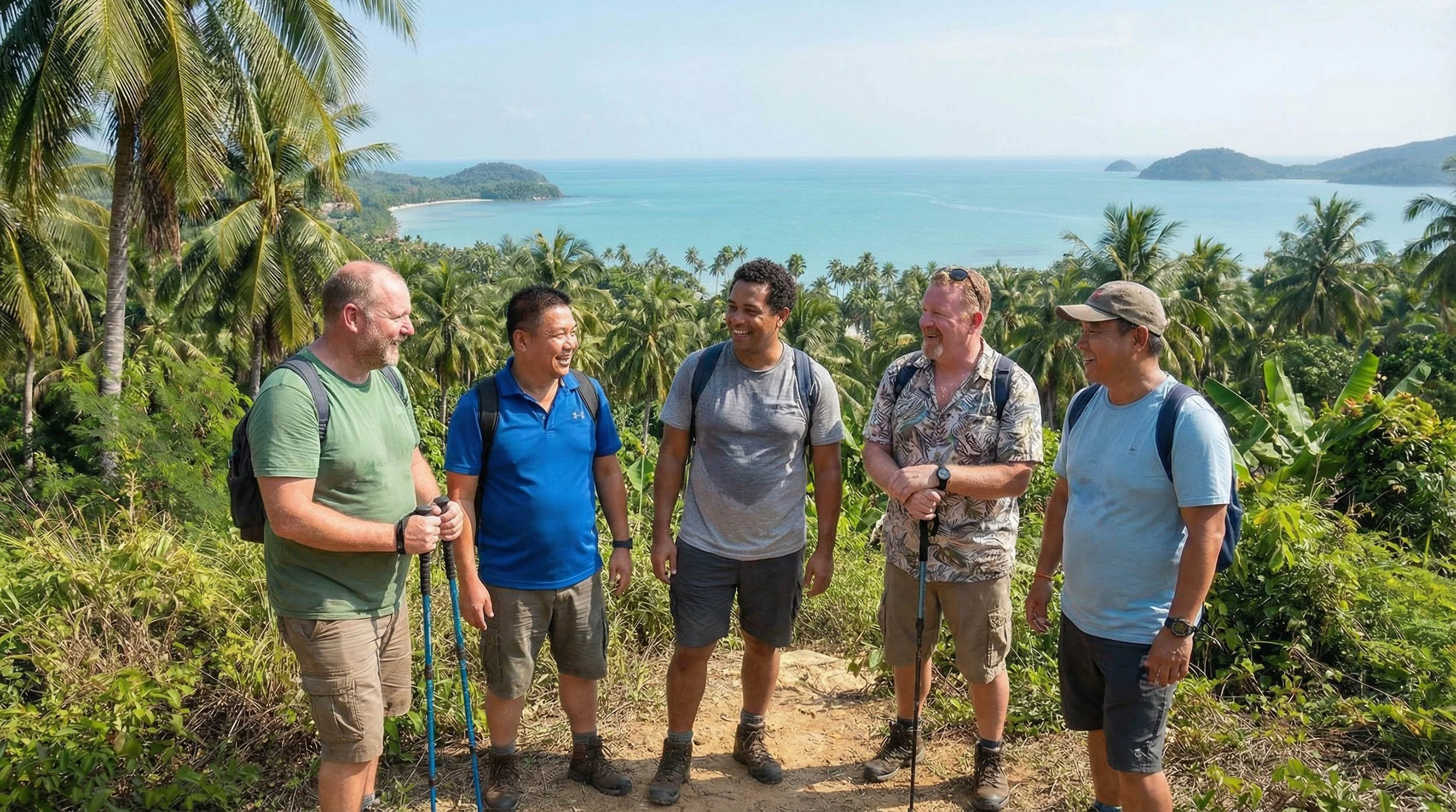
Running the founding cohort changed what I thought I knew. Here's what I learned.
By Simon Millard · July 2026 · 7 min read
I've been building The Blueprint for over a year. I've read everything I could find on the science of health and fat loss. I've consulted doctors, nutritionists, physiotherapists, and wellbeing practitioners. I thought I understood what the programme needed to be.
Then I ran it with real people. And I found out what I'd missed.
This is what the founding cohort taught me.
The Gap Between Design and Reality
Every programme looks elegant on paper. The week-by-week structure, the meal plans, the movement sessions — in theory, it all flows. In practice, the first week of the founding cohort looked nothing like I'd planned. Not because the plan was wrong, but because the people were more complicated, more interesting, and more individual than any plan can fully account for.
One guest arrived in better shape than I expected and was under-challenged. Another arrived with an undisclosed knee issue that changed what movement looked like for them entirely. A third had a relationship with food so tangled with emotion that the nutrition conversations needed to go to places I hadn't fully prepared for.
The programme adapted. And in adapting, it became better than the version I'd designed alone.
"The most powerful results weren't always about weight. They were about the return of something the guests thought they'd lost permanently."
What People Actually Came For
I assumed people came for weight loss. And they did — that was the stated goal, the thing on the form. But in the conversations over the month, what emerged was more layered than that.
One guest talked about wanting to be able to play with his grandchildren without stopping to catch his breath. Another hadn't slept without medication in four years and wanted her body back. A third had watched his father die of a preventable heart condition and was quietly terrified he was heading the same direction.
Weight loss was the door. What they were actually coming through it for was something else: time, presence, a different relationship with their own body, the sense that the second half of life could be different from the first.
Understanding that changed how I talk about the programme. And it changed what I measure at the end of a month.
The Results I Didn't Expect to Talk About
The weight loss numbers were real, and I'm proud of them. But the results that moved me were the ones I hadn't put on any tracking sheet.
A guest who hadn't cooked a meal from scratch in fifteen years, making himself breakfast on his last morning and meaning it when he said he'd keep going. A guest who arrived unable to walk to the beach without stopping, completing a one-hour session in the final week and laughing at how recently that would have been impossible. Written feedback that said 'I haven't felt this way since I was forty' — from someone who is sixty-three.
The most powerful results weren't always the biggest numbers. They were about the return of something the guests thought they'd lost permanently.
What I'm Changing
Three things came out of the founding cohort that are now built into the programme permanently.
First: the pre-arrival health review needs to be deeper. Not more bureaucratic — more personal. Understanding each guest's physical and emotional history before they arrive means the first week is faster, more targeted, and more effective.
Second: the Wellbeing pillar needs more time, not less. It was the element I was most cautious about — hardened executives, I worried, would resist anything that felt too 'soft.' The opposite was true. The sessions on stress, sleep, and mental habits were among the most requested conversations across the whole month. I'm building them out accordingly.
Third: the Personal Blueprint — the take-home plan each guest leaves with — has to be built alongside the guest, not for them. The version I'd designed was comprehensive. What it needed to be was co-authored. Their insights about their own body, their own rhythms, their own life context are irreplaceable. The plan is now built collaboratively across the final week.
A Note on What This Is
The founding cohort reminded me of something I already knew but needed to see demonstrated: a one-month residential health reset is not a quick fix. It's a different kind of starting point. The guests who got the most from their month were the ones who arrived ready to examine not just what they were eating or how much they were moving, but why they'd let things slide in the first place.
That's a more honest conversation than most programmes offer. It's also, I believe, the only one worth having.
The next cohort opens shortly. If you're considering it, I'd genuinely love to talk — before you make any decision.
